 Serving Central & Northern Virginia


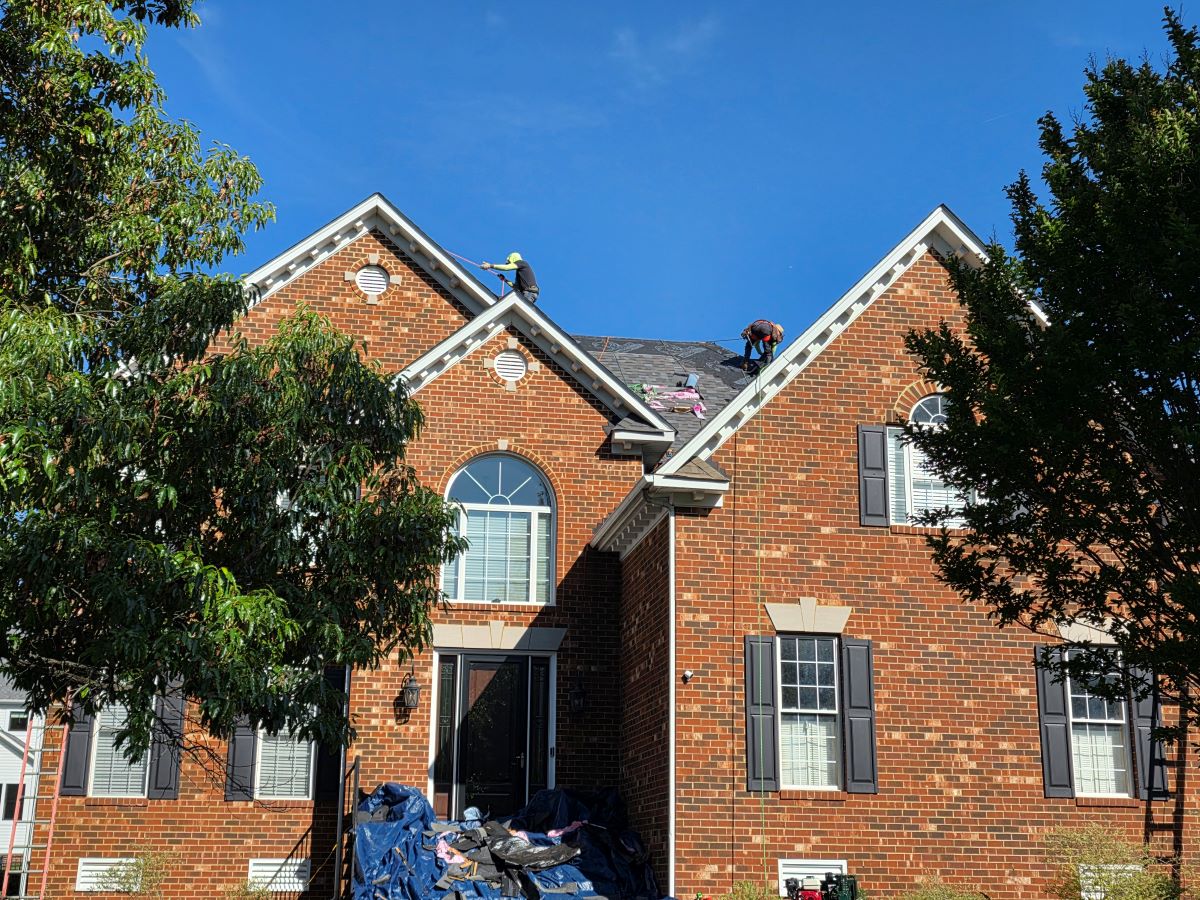
The Hidden Risk: Why Hiring an Uninsured Roofer in Central Virginia Could Cost You Your Home
Replacing a roof is one of the most significant investments a homeowner will make. When gathering quotes for your home, it is highly tempting to pick the lowest bid. However, if a roofing company lacks proper insurance, that cheap estimate can quickly turn into a devastating financial crisis.
In the Commonwealth of Virginia, hiring an unlicensed or uninsured contractor drops all the liability squarely onto your shoulders. Whether you own a home in Richmond, Henrico County, or Hanover County, the legal consequences remain the same.
Here is a breakdown of the severe risks Central Virginia property owners face when hiring uninsured roofers, along with exact strategies to protect your assets.
The Real Risks of a “Cheap” Roofing Estimate:
1. Severe Personal Injury Liability
Roofing is consistently ranked among the most dangerous professions in the United States. Slips, structural drops, and ladder accidents occur regularly.
- The Risk: If an uninsured roofing employee falls from your roof, they are completely unprotected by company workers’ compensation.
- The Virginia Liability: Under the Virginia Workers’ Compensation Commission rules, companies with three or more employees must provide coverage. If they do not, the injured worker can file a personal injury lawsuit against you for medical expenses, lifelong rehabilitation costs, and lost wages.
- The Reality: Standard homeowners insurance policies frequently feature exclusions for injuries resulting from illegal, unpermitted, or unlicensed work, meaning you could be forced to pay out-of-pocket.
2. Major Property Damage Expenses:
Tearing off shingles, operating heavy machinery, and handling open torches creates an environment prone to property accidents.
- The Risk: An unvetted crew could cause a structural fire, accidentally drop a heavy bundle of shingles through your ceiling, or fail to tarp the roof before a sudden storm rolls through Spotsylvania County or Caroline County.
- The Virginia Liability: If the company lacks Commercial General Liability (CGL) coverage, they do not possess the financial safety net to pay for the destruction they caused.
- The Reality: You will have to pay out of your own savings to repair the interior of your house, structural damage, or even a neighbor’s adjacent property.
3. Third-Party Injury Financial Burdens:
Roofing hazards extend past the workers on top of the deck.
- The Risk: Discarded rusty nails, falling tools, or airborne roof debris can strike family members, visitors, neighbors, or passersby walking near your property line.
- The Virginia Liability: Virginia premises liability laws dictate that property owners must maintain a safe environment.
- The Reality: If a third party is harmed because of a roofing crew’s negligence and that crew lacks insurance, you face direct legal actions and medical claims.
4. Instant Voiding of Manufacturer Warranties:
Premium roofing materials from national brands come with extensive material warranties lasting decades.
- The Risk: Most top-tier manufacturers require their products to be installed exclusively by licensed, certified, and fully insured roofers.
- The Virginia Liability: An uninsured roofer will likely compromise your installation quality. If the shingles are fastened or layered incorrectly, the manufacturer will void the warranty entirely.
- The Reality: If your roof develops major leaks or fails two years down the line in King George County, you will have no warranty protection and must pay for a secondary roof installation out-of-pocket.
The Virginia Homeowner Playbook: The 3-Step Verification
Do not rely on verbal assurances or a logo printed on a truck. Protect your property value by verifying credentials through official Virginia state portals before signing any work contract.
- Step 1: Request a Direct Certificate of Insurance (COI). Ask the contractor to send a certificate of insurance directly to your email. Ensure it lists active General Liability and Workers’ Compensation coverage that spans the entire expected duration of your roofing project.
- Step 2: Utilize the Virginia DPOR Portal. In Virginia, roofers must hold a valid state license for any residential project exceeding $1,000. Navigate to the official Virginia Department of Professional and Occupational Regulation (DPOR) portal. Search the contractor’s exact business name to verify that their license status is active and clean of recent disciplinary action.
- Step 3: Check the License Classification Limits. Virginia ranks contractor licenses into specific financial tiers. Make sure your contractor matches the scope of your residential job:
- Class A License: No monetary boundaries on project value.
- Class B License: Restricts individual projects to under $120,000.
- Class C License: Restricts individual projects to under $10,000. (Note: Most full roof replacements exceed this amount, meaning a Class C roofer may be operating outside their legal boundaries).
Work with a Trusted, Fully Insured Professional
A lower estimate from an uninsured roofer is a dangerous financial illusion. The money saved upfront is never worth risking your personal savings, home equity, or peace of mind.
At Weathertight Exteriors LLC, we protect our clients with full licensing, comprehensive general liability coverage, and robust workers’ compensation insurance. We proudly serve homeowners across Richmond, Caroline County, Spotsylvania County, Henrico County, King George County, and Hanover County.
Protect your home the right way. Contact us at 804-664-6631 to help you with your roofing project. Weathertight Exteriors LLC is covered which means, we’ve got you and your home covered.