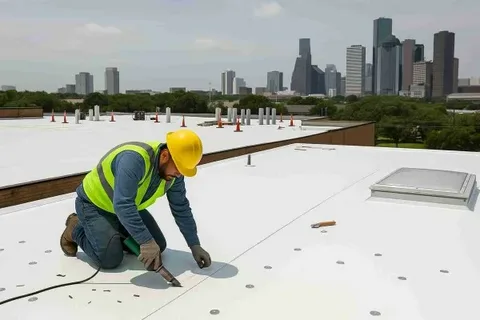
Managing a flat or low-slope roof structure presents unique defense demands for local business owners and residential managers across Central Virginia. Intense weather variations can easily compromise traditional tar or rubber membranes, creating major interior liability issues. Selecting comprehensive TPO Roofing Replacement services in Chesterfield, VA shields your commercial infrastructure from progressive wind damage and severe storm water leaks. Working with a dedicated crew keeps your assembly watertight while maximizing your building thermal performance during the humid summer months. Weathertight Exteriors LLC supports our regional property owners with straightforward diagnostic assessments, long-term energy planning, and dependable single-ply system installations.
Many property managers ignore minor surface defects because they expect massive financial disruptions from local single-ply industrial projects. However, ponding water behind parapet walls weakens the underlying insulation boards and causes eventual roof deck deflection. This neglect transforms a basic flashing adjustment into an extensive deck rebuild that impacts daily company operations. Have you checked your ceiling tiles for faint water rings after the recent seasonal downpours? Catching membrane separations early saves thousands in structural restoration work.
Why property owners choose single-ply thermoplastic systems for low-slope structures
Industrial buildings require resilient defense lines that can handle severe wind uplift and persistent ultraviolet rays. Local managers select Reliable TPO Roofing Replacement services in Chesterfield, VA because these thermoplastic polyolefin systems blend rubber flexibility with hot-air welded seam security. The white, highly reflective face bounces solar heat away from the structure, lowering your monthly climate control strain. These advanced installations also resist chemical exposure and puncture damage from routine HVAC maintenance traffic.

Many regional enterprises request professional TPO roof repair and replacement services in Chesterfield, VA when their aged ballasted assemblies begin holding deep pools of water. Older built-up surfaces dry out, creating brittle cracks that let rainwater bypass your main moisture barriers. Upgrading your facility with a modern single-ply layout creates a clean, uniform seal that simplifies your property management routine. You should choose a partner who knows how to design proper drainage slopes that move water toward exterior scuppers.
Data from national building energy research groups confirms that reflective white roofs reduce cooling energy consumption by a meaningful margin. Property owners save considerable operational funds over time by prioritizing modern insulation values and seamless seam welding during execution. Working with an experienced single-ply installer ensures your facility receives appropriate material thicknesses matching your long-term business goals. Consequently, balancing thick target membranes with solid mechanical fastening keeps your commercial real estate running efficiently year after year.
Comparing single-ply membrane variations and local business suitability
Selecting your commercial flat roof material depends on your specific chemical exposure, structural load limits, and thermal performance requirements. The following table highlights how different modern low-slope materials perform under standard regional conditions.
| Membrane Option | Attachment Method | UV Reflection | Seam Strength | Maintenance Needs |
| Standard 45-Mil TPO | Mechanical Fasteners | High Reflection | Hot-Air Welded | Occasional Washing |
| Premium 60-Mil TPO | Fully Adhered Glue | High Reflection | Hot-Air Welded | Minimal Inspections |
| Reinforced EPDM | Tape and Primer | Low Absorption | Adhesive Seams | Regular Checking |
| Multi-Ply Modified Bitumen | Torch Down Method | Moderate Coating | Melted Overlaps | Annual Maintenance |
Indicators that your commercial facility requires urgent structural attention
Building managers should check their flat roof surfaces twice a year to detect early membrane failures before water breaches the interior deck. Separating perimeter flashing seams represents a common entry point for wind-driven rain during heavy coastal storms. Split membrane patches often develop around older exhaust fan curves due to constant structural vibrations. Addressing these issues immediately through TPO roof repair and replacement services in Chesterfield, VA preserves your indoor warehouse stock.
Deep alligator cracking across old asphalt coatings shows that your current roofing system cannot handle thermal expansion cycles anymore. Soft, spongy insulation sections under your feet mean that water has already saturated your interior recovery boards. Have you noticed a musty odor drifting down from your commercial ceiling ventilation paths? This problem typically points to hidden mold colonies growing inside your wet ceiling insulation layers.
Step-by-step single-ply system installation and welding processes
Experienced roofing crews follow organized safety and structural guidelines when managing large commercial retrofits. Local enterprises like Weathertight Exteriors LLC map out every step to protect your employees and maintain standard facility shipping schedules. Technicians evaluate the existing core deck to verify moisture levels before laying down new recovery insulation panels. Crews then secure the perimeter lines and start the automated hot-air seam welding machinery.
Removing old layers and preparing the commercial deck
Workers strip away degraded tar paper or gravel down to the structural steel or concrete deck panels. Technicians clean away loose debris and swap out any rusted metal sections to secure a flat foundation. Laying down high-density polyisocyanurate insulation boards creates a continuous thermal shield across the entire facility.
Laying out membranes and welding field seams
Crews roll out the wide thermoplastic sheets, letting the material adjust to the afternoon temperature before fastening. Workers use specialized robotic heat welders to fuse the overlapping membrane edges together at temperatures exceeding 800 degrees. This thermal process welds the independent sheets into a singular, cohesive waterproof barrier that resists wind uplift forces.
Operational elements that shape local commercial roofing costs
Understanding what influences your industrial project billing helps you budget correctly for TPO Roofing Replacement services in Chesterfield, VA. The presence of numerous rooftop HVAC systems, skylights, and pipes increases the hand-welding detailing hours required. Higher commercial profiles require advanced crane rentals to lift heavy insulation bundles safely, which alters the setup expenses. Furthermore, specified wind-warranty demands require tight mechanical fastening layouts that consume more physical hardware.
Penetration density and property layout variables
The number of roof obstructions changes how fast a crew can complete TPO roof repair and replacement services in Chesterfield, VA. Areas packed with complex pipe clusters require detailed manual termination bar applications and specialized custom boots. Workers must manually cut and shape individual flashing pieces around these tight spots, extending the total project duration. Clear, open warehouse expanses allow for rapid machine welding, keeping your final labor investments lower.
Municipal building permits and energy code mandates
The Virginia Uniform Statewide Building Code requires strict compliance with modern commercial insulation minimum values during complete re-roofing projects. County building reviewers check r-value calculations before granting final approvals for flat roof renovations. Partnering with a knowledgeable contractor ensures your commercial layout meets these state mandates and passes every municipal field evaluation. Proper compliance also satisfies your commercial building insurance providers during future weather audits.
How to select a professional single-ply contractor
Discovering an experienced and qualified business for your Expert TPO roof repair and replacement services in Chesterfield, VA indeed requires a look into commercial credentials. Make sure your commercial roofer has extensive liability insurance and the right manufacturer safety certifications. The benefit of working with a regional company like Weathertight Exteriors LLC, which has local offices, is that they know county codes and wind designations. Steer clear of out-of-state crew networks that are not real industrial welders yet arrive after hailstorms.
Typically, no general contractors will own automatic hot-air welding equipment; only specialized commercial roofing firms will possess this equipment. Professional teams provide detailed wind-uplift data sheets and digital cores sample records to make corporate accounting easier. Are you capable of assessing manufacturer material warranties vs independent workmanship guarantees? A reliable business will offer you a clear breakdown in the contract, stating the thickness of the sheets, the density of the insulation, and the amount they charge for disposal with no surprise fees.
Maximizing industrial roof longevity through preventative drainage care
Keeping your slope paths correct will keep your single-ply system clean and avoid premature membrane wear due to standing water pool weights. Every spring, maintenance teams must remove seasonal leaf build-up from internal roof drains or risk storm water blockage. When drain grates are clogged, huge pools of water build up over large areas which causes stress on the steel structural support joists. Cutting back tall trees on the property prevents dropping organic matter that allows destructive root growth in wet corners.
Research from the Single Ply Roofing Industry (2024) shows that proactive inspection prevents more than 60% of unexpected structural failures. The inspectors check the termination bars on the parapet walls, which have high stress from the winds. By re-sealing weathered caulk lines around the pipe flashings early on, small moisture leaks will not get into your office. Regular maintenance preserves the integrity of your commercial warranty while delivering maximum functional life to your asset.
Weather-related dangers to single-ply roof systems
The flat commercial roofs in Central Virginia have to deal with freezing winter ice sheets and blazing hot July afternoons. When the temperature drops suddenly, metal building components contract, which puts sharp tension on the roof edge flashings. During summer storms, heavy rains can cause pooling on low-slope surfaces. This can impact the integrity of hot-air welded seams. Commercial operators should use thick, high-performance waterproof thermoplastic membranes that can withstand these climatic changes.
During cold snaps, it is possible for icicles to form inside the outside downspouts causing a cold slush to back up your low slope edges. If your structure was built using antiquated rubber glue, this standing moisture can leak through old, unwelded seams. This winter moisture won’t disrupt your warehouse operations when we install heavy-duty reinforced membranes along drainage pathways. Selecting contemporary heat-fused materials will protect your operations from the storms common in our area.
Conclusion
In Chesterfield VA, TPO roofing replacement services are very important for your business so that you can save your asset. Identification of structural warning signs like opening seams and saturated insulation helps you fix flat roof defects before major damage to the interior part occurs. Partnering with a seasoned commercial contractor guarantees that your commercial building in Virginia is built in compliance with energy codes and can withstand seasonal climate extremes with ease. For a local team that understands local conditions, Weathertight Exteriors LLC offers in-depth assessments and can take you through your options without pressure.
FAQs
What are the primary signs that a commercial flat roof membrane requires complete replacement?
Facilities usually experience chronic interior leaks, wide seam separations, or large sections of soft, wet insulation underneath the main sheet. Finding these major warning signs early allows for scheduled replacements before water ruins your interior commercial stock.
How do hot-air welded seams compare to traditional glued edges on low-slope properties?
Hot-air welding fuses independent thermoplastic sheets into a singular, continuous barrier that is significantly stronger than old glue options. Fused seams resist water penetration and high wind uplift forces much better over long commercial lifespans.
Does Chesterfield County require an official building permit for commercial single-ply renovations?
Local building offices require formal permits for complete commercial flat roof replacements to ensure the building meets current energy insulation rules. Your commercial contractor should manage the permit filings and coordinate the official structural field checks.
How does intense summer sun affect white thermoplastic polyolefin roof performance?
Reflective white membranes are designed to bounce solar rays away from your facility, keeping surface temperatures low during hot months. This reflection protects the underlying membrane from thermal degradation and lowers your building’s monthly cooling costs.
Can an experienced roofer install a new single-ply system directly over an old rubber roof?
Virginia building codes allow a second layer under specific conditions, but stripping the old material down to the deck is best. Removing old assemblies lets technicians find hidden rust or deck damage before completing the new installation.