 Serving Central & Northern Virginia


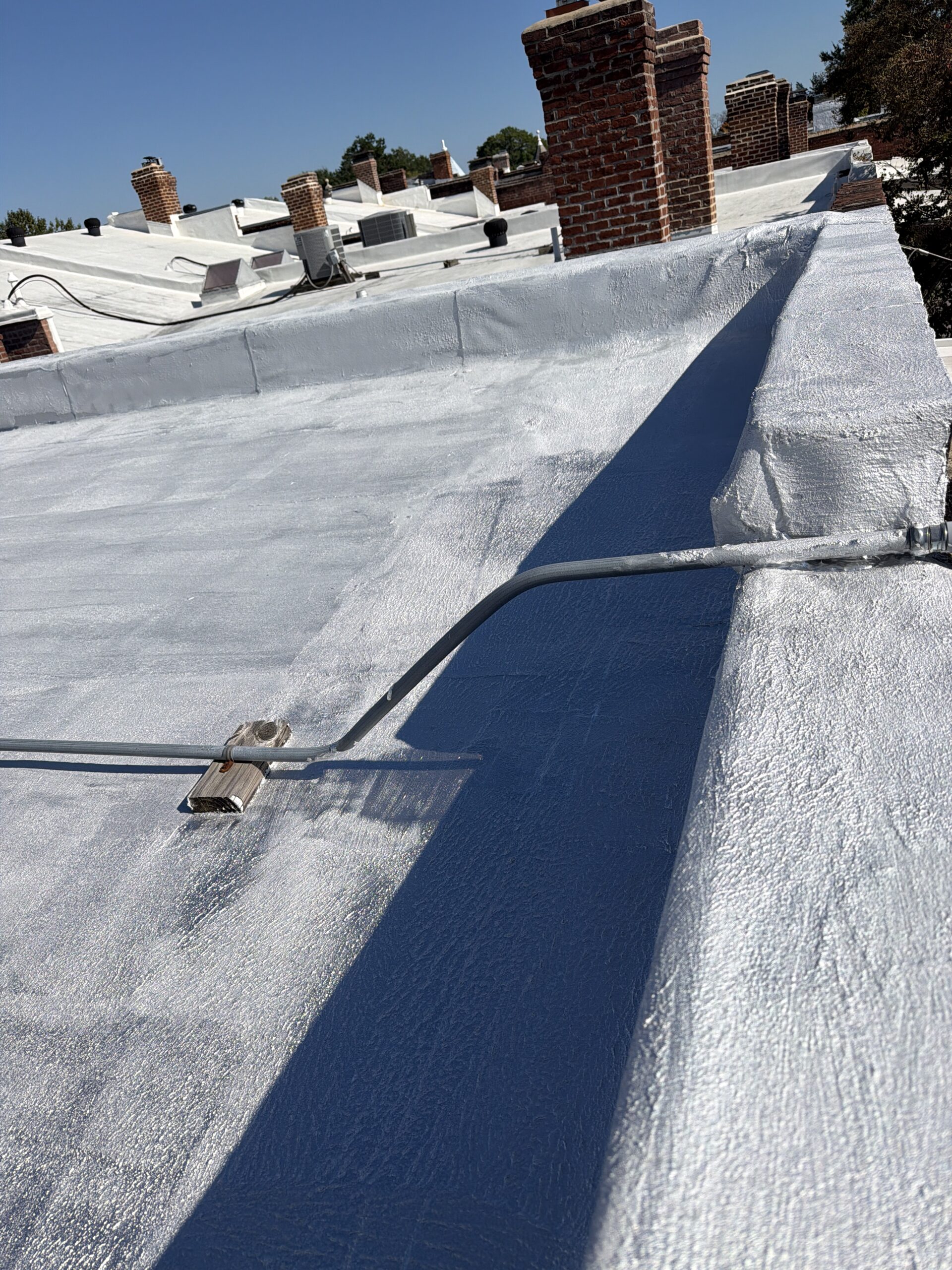
Replacing a flat roof can be a significant investment, especially for commercial property owners managing larger buildings. But what if the existing roof isn’t ready for replacement?
In some situations, a flat roof coating can help protect an aging roofing system and extend its useful service life without requiring a complete tear-off.
The important question isn’t simply whether a roof can be coated. It’s whether the existing roof is in suitable condition for a coating to perform as intended.
What Does a Flat Roof Coating Actually Do?
Roof coatings are applied over compatible existing roofing systems to create an additional protective surface. Depending on the product, a coating may help resist weather exposure, protect against ultraviolet damage, and reduce deterioration of the underlying roofing material.
Some reflective coatings can also reduce heat absorption at the roof surface.
However, a coating is not a substitute for a properly functioning roofing system. Existing damage, trapped moisture, deteriorated materials, and drainage problems must be evaluated before a coating is recommended.
Three Common Types of Roof Coatings
Silicone Roof Coatings
Silicone coatings are commonly used on compatible flat and low-slope roofs. They provide a water-resistant protective surface and generally offer strong resistance to ultraviolet exposure.
Certain silicone systems are particularly useful where standing water is a concern, although drainage and underlying roof conditions still need to be evaluated.
Acrylic Roof Coatings
Acrylic coatings are generally water-based and are available in reflective formulations that can help reduce roof surface temperatures.
They typically perform best on roofs with positive drainage. Prolonged standing water can affect the performance of many acrylic coating systems.
Fibered Aluminum Roof Coatings
Fibered aluminum roof coatings combine an asphalt-based formulation with aluminum pigments and reinforcing fibers to create a durable, reflective protective surface.
These coatings can be suitable for certain asphalt-based roofing systems, including built-up roofing and modified bitumen, as well as compatible metal roofs.
At Weathertight Exteriors, we use Henry 555 Fibered Aluminum Roof Coating when appropriate for the existing roof’s condition and manufacturer’s application requirem
When Is a Roof Coating Worth Considering?
A roof coating may be a practical restoration option when the existing roof is structurally sound, reasonably dry, and compatible with the proposed coating.
For example, an aging flat roof may show surface wear from years of exposure while the underlying roofing system remains serviceable. In that situation, a properly selected and installed coating may help extend the roof’s useful life.
Roof coatings can be considered for both residential low-slope roofs and commercial roofing systems, depending on the materials and conditions involved.
When Is a Roof Coating NOT the Right Solution?
Not every flat roof should be coated.
If the roof has widespread leaks, saturated insulation, failing seams, deteriorated decking, or significant structural problems, applying a coating over those conditions may conceal problems rather than correct them.
A coating also cannot compensate for incompatible roofing materials or serious drainage deficiencies.
Sometimes repairs are necessary before a coating can be applied. In other situations, roof replacement is the more appropriate long-term investment.
Start With an Evaluation, Not a Product Recommendation
Before recommending a roof coating, Weathertight Exteriors evaluates the existing roofing material, visible condition, drainage, and areas requiring repair.
We believe the condition of the roof should determine the recommendation, rather than assuming every aging roof needs replacement or every flat roof is a candidate for coating.
A roof coating can be a valuable restoration option when the conditions are right. The key is knowing whether your roof is a suitable candidate before investing in the application.
Considering a roof coating for your property? Learn more about our Flat Roof Coating Services in Central Virginia and request an evaluation to determine whether restoration may be appropriate for your roof.