 Serving Central & Northern Virginia


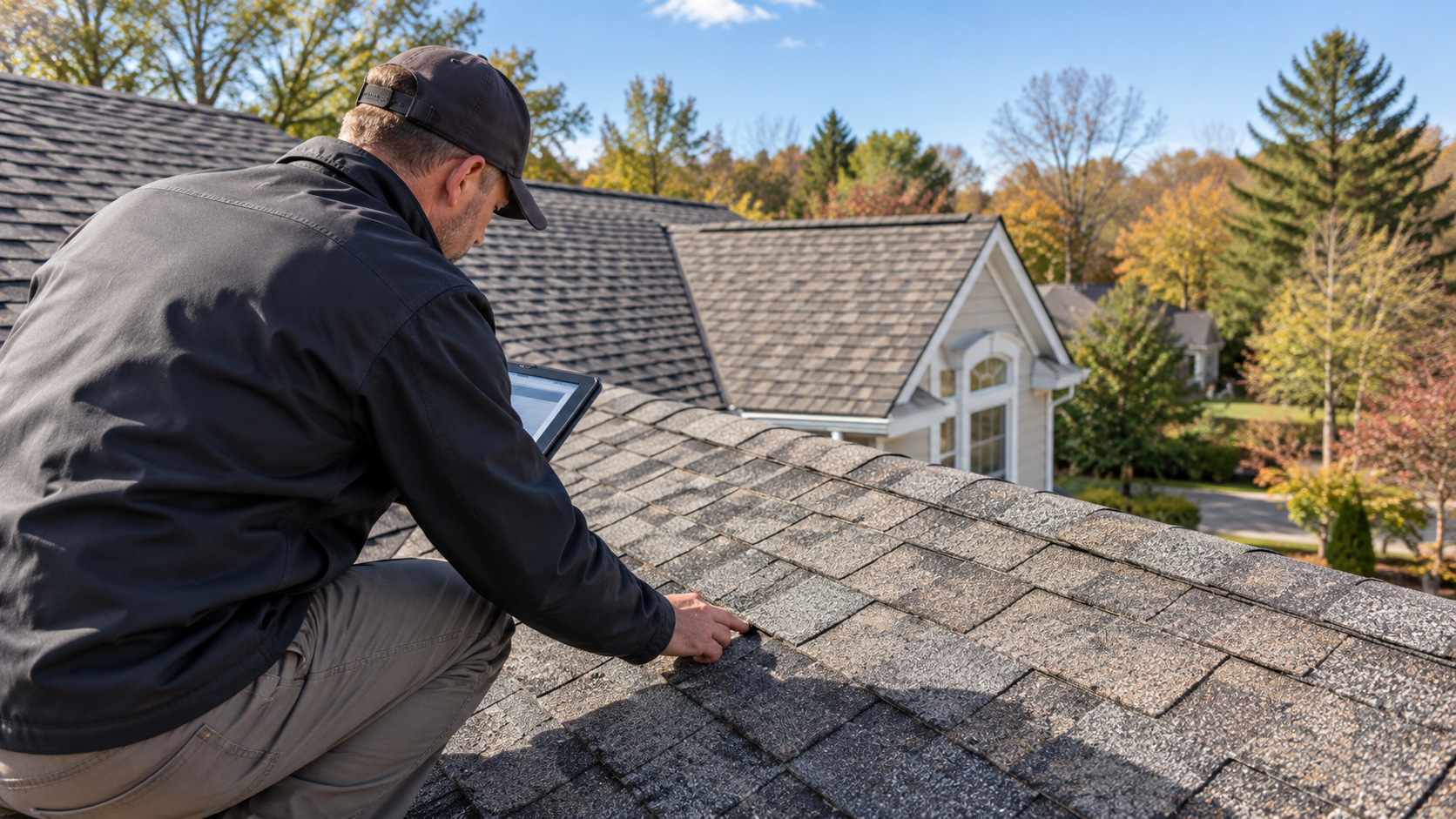
If you’ve recently received a letter from your homeowners insurance company raising concerns about the age or condition of your roof, you’re not alone. Homeowners may be asked to make roof repairs, replace an aging or damaged roof, or provide additional information about the roof before their policy is renewed.
Before assuming that you need a new roof, start by reading exactly what your insurance company is requesting. In some situations, the next step may simply be a roof replacement estimate. In others, the insurer may request photographs, documentation of the roof’s condition, or a roof inspection for insurance with a written report.
Understanding the difference matters. A roof replacement estimate and a detailed insurance roof inspection are two different services, and knowing what your insurance company actually needs can save time, confusion and unnecessary expense.
Before You Schedule Anything, Read the Insurance Letter Carefully
A letter from your homeowners insurance company does not always mean the same thing. One company may be requesting that specific roof damage be repaired, while another may be requiring roof replacement before renewing the policy. In other situations, the insurance company may be asking for additional documentation about the roof’s age, condition or remaining useful life.
Read the letter carefully and look for exactly what the insurance company is requesting, along with any deadline for completing the work or providing documentation. If the wording is unclear, contact your insurance agent or carrier and ask what information they will accept.
Before scheduling a roof inspection for insurance, it can also be helpful to provide the roofing contractor with a copy of the letter. This allows the contractor to understand what the insurance company is asking for and whether you need a replacement estimate, an inspection with photographs and a written report, or another type of documentation.
Does an Insurance Letter Mean You Have to Replace Your Roof?
Not necessarily. The first step is to determine exactly what your insurance company is requiring and then evaluate the actual condition of the roof.
Some insurance letters may specifically require roof replacement before the policy can be renewed. Others may identify particular areas that need repair or request additional information about the roof’s condition. The appropriate response depends on both the wording of the letter and what is found during the roof evaluation.
If the insurance company is specifically requiring replacement, a free roof replacement estimate may be all you need from a roofing contractor. If the company is requesting information about the roof’s age, condition, remaining useful life or photographs of the roofing system, a more detailed inspection and written report may be appropriate.
A roofing contractor can evaluate and document the roof, but the insurance company ultimately determines what documentation it will accept and what requirements must be satisfied for the policy.
Virginia’s Roof Inspection Rules Are Changing in 2027
Beginning January 1, 2027, Virginia law will provide new protections for homeowners with asphalt shingle roofs when an insurance company raises concerns about the roof’s age or condition.
Under the new law, an insurer cannot refuse coverage, cancel or refuse to renew a policy on an owner-occupied home solely because an asphalt shingle roof is less than 15 years old. For roofs that are at least 15 years old, the homeowner must be permitted to have the roof inspected by an authorized inspector, at the homeowner’s expense, before the insurer requires replacement as a condition of issuing or renewing the policy.
The law also addresses the condition of the roof. If an authorized inspector reports that an asphalt shingle roof has five years or more of useful life remaining, the insurer cannot require complete roof replacement solely because of the roof’s condition. However, the insurance company may still require repairs or replacement of damaged, deteriorated or deficient portions identified during the inspection.
The law does not mean that every older roof will automatically qualify for continued coverage. Roof damage, deterioration, installation deficiencies, moisture intrusion and other documented problems can still affect an insurer’s decision.
Is a Roof Replacement Estimate the Same as an Insurance Roof Inspection?
No. A roof replacement estimate is intended to provide the cost and scope of replacing your roof. At Weathertight Exteriors, roof replacement estimates are free.
A roof inspection requested for insurance purposes may involve considerably more documentation. Depending on what your insurance company requires, the inspection may include photographs of the roof and roofing components, documentation of visible damage or deterioration, information about the roof’s age and condition, and a written report describing the contractor’s findings.
Preparing that documentation requires additional inspection time as well as time to organize photographs and prepare the written report. For that reason, insurance inspections requiring written reports, photographs or other documentation are a paid professional service, separate from a free roof replacement estimate.
The inspection fee varies based on the size, pitch, complexity and accessibility of the roof, as well as the type of documentation being requested. Steep or complex roofs may require additional safety measures or alternative methods to inspect areas that cannot be safely accessed on foot.
What Does a Roof Inspection for Insurance Include?
The exact scope of a roof inspection for insurance depends on what the insurance company is requesting and the characteristics of the roof. This is one reason we recommend providing a copy of the insurance letter before the inspection is scheduled.
Depending on the request, the inspection may include an evaluation of the roofing material, flashing, penetrations, pipe collars, valleys, roof edges and other visible roofing components. We may also document visible wear, deterioration, previous repairs or damage that could affect the condition of the roofing system.
Photographs can be included to document the conditions observed during the inspection. When a written report is requested, the report can explain our findings and provide the roofing information we are reasonably able to determine from the inspection. The goal is to provide an accurate assessment of what we observe on the roof, not to reach a predetermined conclusion that the roof needs to be replaced.
What Happens After a Roof Inspection for Insurance?
Once the inspection is complete, the next step depends on what was found and what your insurance company requested in its letter.
If a written report and photographs were requested, those documents can be provided to your insurance company or agent for review. If repairs are recommended, the report can identify the areas of concern and the roofing work that may be appropriate. If the condition of the roof supports replacement, a separate roof replacement estimate can be provided at no charge.
If repairs or replacement are completed, keep copies of invoices, contracts, photographs and other documentation showing the work that was performed. Your insurance company may request proof that the required work has been completed before renewing or continuing the policy.
It is important to remember that a roofing contractor documents the condition of the roof and provides recommendations based on what is observed during the inspection. The insurance company ultimately determines whether the documentation provided satisfies its underwriting or renewal requirements.
Having the Right Information Helps You Decide What Comes Next
Receiving a letter from your homeowners insurance company about your roof can be unsettling, especially when you don’t know whether the concern means a repair, a complete roof replacement or simply additional documentation.
Having accurate information about the condition of your roof gives you a clearer picture of what actually needs to happen next. The goal of an inspection is to document what is observed, explain any concerns that are found and provide the information requested by your insurance company when possible.
At Weathertight Exteriors, we believe the roofing recommendation should come from what we actually find on the roof. If repair is appropriate, we’ll explain the repair. If replacement is warranted, we’ll explain why. And if the roof is in serviceable condition, the inspection should reflect that too.
An insurance letter may start the conversation, but the actual condition of the roof should guide the roofing recommendation.